What is peritoneal pseudomyxoma?

There are different types of tumors that arise in the appendix. Some are benign tumors, while others are malignant.

The tumors that cause pseudomyxoma are called mucinous (due to the production of mucin/gelatin). They can be briefly classified as low-grade mucinous tumors, high-grade mucinous tumors, and mucinous adenocarcinomas of the appendix.

The least aggressive is the low-grade tumor, which is still a benign tumor. The most aggressive is the adenocarcinoma, which is already classified as a cancer of the appendix.

Despite this, even mucinous adenocarcinoma of the appendix, being a more aggressive tumor, has one of the best prognoses among those affecting the digestive tract.
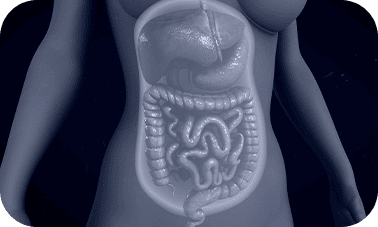
The peritoneum is the internal lining of the abdomen. It is a membrane that covers almost all spaces and organs.

It is like wallpaper covering all the walls of a room, including the furniture.

Therefore, tumors that affect the peritoneum can virtually compromise any organ in the area.
peritônio
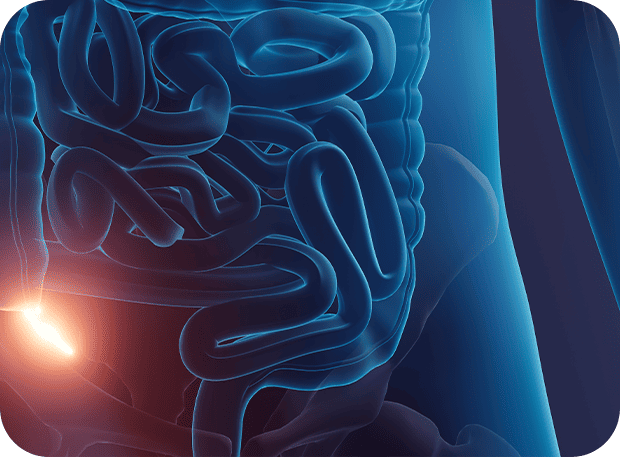
The tumor obstructs the internal space of the appendix, and mucin progressively accumulates because it has no way to exit.

Over the months, the appendix enlarges as if it were an increasingly inflated balloon. At this stage, the tumor is restricted to the appendix, and pseudomyxoma does not yet exist. Tumors discovered at this stage can be treated by simply surgically removing the appendix.

Over time, a perforation of the organ occurs, and the accumulated mucin, along with tumor cells, falls into the abdominal cavity and begins to circulate through the peritoneum.
Progressively, tumor cells attach to the peritoneal surface. Each tumor focus is a metastasis and begins to produce more mucin.

After a long evolution, which can sometimes take years, the patient accumulates liters of mucin within the abdominal cavity, and the tumor implants itself on virtually the entire inner surface of the abdomen and abdominal organs. It is common for the patient to think they are gaining weight due to the increase in abdominal circumference.

This condition, with mucin spread throughout the abdomen, is called peritoneal pseudomyxoma.
Pseudomixoma peritoneal

Os pacientes falecem por desnutrição e obstrução do intestino

Pseudomyxomas originating from benign tumors of the appendix (low-grade tumors) tend to evolve very slowly, sometimes over a decade. When pseudomyxoma arises from a malignant tumor of the appendix (adenocarcinoma), the evolution is faster.

Does peritoneal pseudomyxoma have a cure?

In any case, if left untreated, pseudomyxoma progresses with an increasing accumulation of mucin and infiltration of the intestine by tumor implants. Patients die from malnutrition and intestinal obstruction.

Pseudomyxoma is fatal in 100% of untreated patients, while the chance of cure with appropriate treatment is very high.
abdômen - região de origem mais comum do pseudomixoma peritoneal
The term “peritoneal pseudomyxoma” refers to an accumulation of mucin, a type of gelatin, within the abdomen.

The most common origin of pseudomyxoma is a tumor in the cecal appendix, a small portion of the large intestine, best known for causing appendicitis.

In women, ovarian tumors can also be the cause of pseudomyxoma.

Does peritoneal pseudomyxoma have a cure?

In any case, if left untreated, pseudomyxoma progresses with an increasing accumulation of mucin and infiltration of the intestine by tumor implants. Patients die from malnutrition and intestinal obstruction.

Pseudomyxoma is fatal in 100% of untreated patients, while the chance of cure with appropriate treatment is very high.
pseudomixoma tem cura?
Sintomas do pseudomixoma

Symptoms of pseudomyxoma.

Learn more
Discover the symptoms of pseudomyxoma: increased abdominal volume, respiratory and eating difficulties, as well as constant and diffuse pain.
Learn more
Onde tratar pseudomixoma? Encontre especialistas

Where to treat pseudomyxoma?

Learn more

Find out where to treat pseudomyxoma: look for specialized centers with a multidisciplinary team for an accurate diagnosis and appropriate treatment.
Learn more
Como é o tratamento do pseudomixoma?

How is the treatment of pseudomyxoma?

Learn more
The treatment of peritoneal pseudomyxoma is primarily based on surgery. Traditional chemotherapy is not used, neither before nor after surgery.
Learn more

For more information about consultations and surgeries, please contact our team!

Formulário de Contato (1)

Agendar consulta
desenvolvido com coração por evonline Pseudomixoma Peritoneal © 2025